According to the Mirror, guests will be served champagne and wine, after beer was deemed to be inappropriate for the occasion.
"There won't be any beer. Let's face it, it isn't really an appropriate drink to be serving in the Queen's presence at such an occasion."
"It was always their intention to give their guests a sophisticated experience and they have chosen the food and drink with this in mind."
Quails' eggs with celery salt, mini Yorkshire puddings with roast beef and mini sausage rolls are expected to be served on the day.
The couple have vowed to stay sober for the day.
Wednesday, April 27, 2011

Thursday, July 22, 2010
Sherry Glass
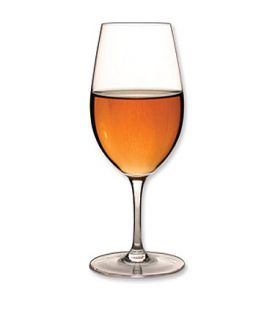
Sometimes called a copita, this pear shaped glass is also suitable for port, Madeira and liqueurs
Glasses
There are 8 main types of drinking glasses, each designed to complement the taste and bouquet of the wine or spirit it is intended to hold. The best quality glasses are full lead. or lead crystal; full lead crystal contains 30 per cent lead oxide, ;lead crystal contains 25 per cent lead oxide, and it is this addition that gives glassware its brightness and clarity weight and strength. The thinner and finer the glass the better the wine or spirit tastes.
serving wine
If your white wine has not been stored in a cool place such as a fridge. chill it for 15 minutes in bucket of ice or ice water.
Serve dry white wine and champagne at about 10*c and dersert or sparling wines at 4*c
The flavour of young reds usually benefits from decanting the wine at least an hour before the meal, but decant mature wines an hour before serving.Uncork the bottle to air young ines for serveral hours and one or two hours for mature.
Old Burgundy, Chianti and Cótes du Rhóne are best served ar abot 18*c, most other red wines and Bordeaux at 16*c but young red Bordeaux at 14*c and Beaujolais at 11*c
Serve dry white wine and champagne at about 10*c and dersert or sparling wines at 4*c
The flavour of young reds usually benefits from decanting the wine at least an hour before the meal, but decant mature wines an hour before serving.Uncork the bottle to air young ines for serveral hours and one or two hours for mature.
Old Burgundy, Chianti and Cótes du Rhóne are best served ar abot 18*c, most other red wines and Bordeaux at 16*c but young red Bordeaux at 14*c and Beaujolais at 11*c
Wine with food
There are some foods that do not combine well with any kind of wine; these include anything dressed with vinegar or large quantities of lemon juice, pickled foods, egg dishes, anything heavily spiced with chilli or curry, and chocolate.
When planning what wines to serve choose according to the sauces to be used and method of cooking.
Serving Tips
Serve dry wine before sweet, because you are unlikely to enjoy the dry wine after eating or drinking something even slightly sweet.
If you are serving the same wine throughout the meal, offer young before old. Go from the lightest to the heaviest wines, always serve the finest last.
Shellfish are usually served with chilled dry white or Rose wines.
Fish dishes also go well with rose or pink wines. but depends on the flavor of the fish. fish of subtle flavour such as trout need a delicae wine such as an Anjou rose or a Riesling: stronger tasting fish need weightier wines such as a white Burgundy or Rioja.
Poultry can be accopanied by red or white wines in France duck and goose are frequently served with a red Burgundy or Bordeaux (claret), although they also go well with a Gewurztraminer or a Riesling.
As a rule of thumb choose the wine for the meat according to the strenght of the flavour and accompaniments - a light wine for lighter flavour and simple stuffing. a stonger wine for richer ones.
When planning what wines to serve choose according to the sauces to be used and method of cooking.
- A sauce of white wine, cream and mushrooms, for example, needs to be eaten with an assertive white wine such as an "Entre-Deux-Mers" or a white Burgandy.
- Sauces made from horseadish or mint diminish the taste of fine wines - match them with a robust, everyday wine such as a Muscadet or a Dáo.
- Fried dishes or fatty meats need robust wines to cut across the fat and freshen the pallet; a white Spanish or Italian wine goes well with fish and a good red Burgundy goes with fatty Poultry
Serving Tips
Serve dry wine before sweet, because you are unlikely to enjoy the dry wine after eating or drinking something even slightly sweet.
If you are serving the same wine throughout the meal, offer young before old. Go from the lightest to the heaviest wines, always serve the finest last.
Shellfish are usually served with chilled dry white or Rose wines.
Fish dishes also go well with rose or pink wines. but depends on the flavor of the fish. fish of subtle flavour such as trout need a delicae wine such as an Anjou rose or a Riesling: stronger tasting fish need weightier wines such as a white Burgundy or Rioja.
Poultry can be accopanied by red or white wines in France duck and goose are frequently served with a red Burgundy or Bordeaux (claret), although they also go well with a Gewurztraminer or a Riesling.
As a rule of thumb choose the wine for the meat according to the strenght of the flavour and accompaniments - a light wine for lighter flavour and simple stuffing. a stonger wine for richer ones.
Thursday, June 24, 2010
Cocktails made easyish
First Chill the ingrediants bottles in th efridge for several houres before mixing cocktail, and keep a selection of short and tall glasses in the fridge, if possible. Alternativly fill each glass with ice while the drinks are being prepared. Empty them before pouting the drinks.
Have plenty of ice availble for chilling the drinks.
The measures given here are for standard versions of the cocktails; they can be expanded, strnghthened or diluted as required.
Dry Martini
Dry vermouth
Gin
Strip of lemon ring
Small green olives
Mix 1 part of vermouth to 2 parts of gin in a jug containing plenty of ice. Stir until chilled, and strain into small, wide rimmed cocktail glasses. Add more gin for a drier martini; more vermouth for a less potent one. Serve with an olive on a cocktail stick in a glass. Twist a strip of lemon rind over a glass to release the oils, and then drape it over the edge.
Have plenty of ice availble for chilling the drinks.
The measures given here are for standard versions of the cocktails; they can be expanded, strnghthened or diluted as required.
Dry Martini
Dry vermouth
Gin
Strip of lemon ring
Small green olives
Mix 1 part of vermouth to 2 parts of gin in a jug containing plenty of ice. Stir until chilled, and strain into small, wide rimmed cocktail glasses. Add more gin for a drier martini; more vermouth for a less potent one. Serve with an olive on a cocktail stick in a glass. Twist a strip of lemon rind over a glass to release the oils, and then drape it over the edge.
Wednesday, June 2, 2010
HangOver part two
Drinking Juice/Coffee Afterward: The base premise behind both of these seems to be that drinking lots of juice or coffee will speed up your metabolism and thus the processing of the alcohol. The problem with juice is that it would take gallons of juice to get enough sugar in your system to really change your metabolic rate—an already suspect line of reasoning since researchers in the 1970s established that drinking lots of juice slows down the metabolizing of alcohol. Then, even if the questionable trick worked, you'd have to deal with the massive insulin spike and sugar crash that followed—which can be just as nasty as a hangover. Hydration is important, especially after drinking it up, but juice doesn't do anything special to help you.
Coffee fails in a related fashion. If you drank enough coffee to speed up your metabolism enough to effect the processing of alcohol you'd give yourself heart palpitations and the side effects of mega-dosing on caffeine would dwarf the side effects of your hangover. Even worse, one study suggests that coffee-plus-hangover is a recipe for bad decision making.
If a glass of V8 or a strong cup of coffee makes you feel better/sober up then sure, drink some. Just don't expect it to magically absorb all that vodka. Between the two, the V8 is the superior choice—coffee is a diuretic and light on any nutritional value, whereas your V8 is packed with vitamins and salt, both of which you could use some more of after a night of drinking.

Slamming Pain Killers: Don't load up on over-the-counter pain killers before bed. Not only do drugs like Aspirin and Acetaminophen have short windows of effectiveness in the body—you'll be asleep for their most effective time—but they're hard on your stomach and liver. That's not normally an issue when you're sober, but now is the time to pay attention to those bottle-warnings. Acetaminophen is especially harsh on your liver—thus the big warning on the box of Tylenol about not taking it along with alcohol. Save the pain killers for the next day and only if you really need them—again, you need to let your body focus on purging the alcohol.
Drinking Water: Water is a magical elixir that makes your body function. You can never go wrong drinking lots of it and it's the absolute best thing to keep yourself from getting hungover and speeding up hangover recovery. Even better than just drinking a lot of water after the fact is drinking water throughout the prior night.
My unofficial never-have-hangovers routine is to drink a tall glass of water for every unit of alcohol I consume—a unit being one of the equivalency portions they teach in you in health class—1 shot=1 glass of wine=1 beer. Drink water frequently through the night, drink lots of water before you go to bed, drink more water in the morning. In addition to keeping you well hydrated, this technique also serves to regulate alcohol consumption. Would anyone really do 20 shots in an evening if they had to drink around 2 gallons of water to go with them?
Eat Up: Drinking liquids doesn't close the valve in your stomach or jump start the metabolic process—one of the reasons drinking cola fattens you up so quickly—so make sure you eat well before you start drinking. The myth side of this tip is that food some how absorbs alcohol and locks it up until your body digests the food. The real reason is the valve in your stomach closes to start the digestion process and it takes longer for the alcohol to absorb into your system—a huge cheeseburger is a metaphorical whiskey-sponge, not a literal one.
A solid meal will cause your stomach to focus on slowing the movement of food and liquid through your body so the digestive process can occur. If you skip the pre-bar-hopping meal, the alcohol you drink is essentially boarding a speed train to your blood stream. Focus on fat and protein-loaded foods to provide a nice slow-burning meal that will help regulate the absorption of alcohol.

Don't neglect a good breakfast, either. You may not feel like eating in the morning, but the last thing your body needs is you stumbling around like a zombie on and empty stomach. Mopping up the mess you made with a bottle of Tequila—just because it's a lighter-colored liquor doesn't always mean it'll protect you from a hangover—is hard work, and you'd be a jerk not to feed the help. Get a solid breakfast with complex carbs and some protein—a case for a farmer's omelet and some thick-sliced toast if there ever was one or perhaps a nice delicious bacon sandwich—to help your body power through
Monday, May 31, 2010
The Hangover
Drinking More Alcohol, aka Hair of the Dog: This is quite likely the most heavily toted hangover cure in the boozin'-recovery handbook. Unfortunately it's completely ineffective. Drinking when you're suffering from a hangover makes you—temporarily!—feel better simply because alcohol dulls your senses. You could just as easily prescribe a double-shot of Tequila as a "remedy" for bashing your thumb with a hammer.
You might achieve temporary relief from your hangover—if it works at all—but you'll just prolong the agony. Your body has to process all the toxins you spent all night shoving in it (delicious or not, alcohol is no wheat-grass smoothie when it comes to being body-friendly), and giving it more just extends the timetable.
You might achieve temporary relief from your hangover—if it works at all—but you'll just prolong the agony. Your body has to process all the toxins you spent all night shoving in it (delicious or not, alcohol is no wheat-grass smoothie when it comes to being body-friendly), and giving it more just extends the timetable.
Beer and food made easy
Pale Ales - Salads, light appetizers, fish and seafood
India Pale Ales (IPAs) - IPAs can stand up to a little more richness and flavor. They can go well with things like pulled pork, pizza, and fried chicken, as well as lighter salads and seafood dishes. And if you like heat, try an IPA with spicy food - the hoppiness really pumps up the spice quotient!
Hefeweizens and Wheat Beers - Fruit dishes, dinner salads, grain salads, and desserts made with warm spices (cloves, cinnamon, nutmeg).
Amber Ales - Ambers are a good middle-of-the-road beer and go well with just about anything: burgers, grilled cheese, roast chicken, soups and stews
Stouts and Porters - Barbecue, stews, braised dishes - any kind of meat dish, really. Also rich desserts with chocolate and espresso flavors.
India Pale Ales (IPAs) - IPAs can stand up to a little more richness and flavor. They can go well with things like pulled pork, pizza, and fried chicken, as well as lighter salads and seafood dishes. And if you like heat, try an IPA with spicy food - the hoppiness really pumps up the spice quotient!
Hefeweizens and Wheat Beers - Fruit dishes, dinner salads, grain salads, and desserts made with warm spices (cloves, cinnamon, nutmeg).
Amber Ales - Ambers are a good middle-of-the-road beer and go well with just about anything: burgers, grilled cheese, roast chicken, soups and stews
Stouts and Porters - Barbecue, stews, braised dishes - any kind of meat dish, really. Also rich desserts with chocolate and espresso flavors.
Wednesday, May 12, 2010
The HangOver
1.
Lots and lots of beer...it can be a bad idea.
Lots and lots of beer...it can be a bad idea.
Know your limits. 75% of people who imbibe alcohol to intoxication will have a hangover the next day. The number of alcoholic beverages it takes to reach a state of intoxication varies from person to person. Don't have more than 3 beverages in 1-2 hours, and no more than 5 beverages in one night.[2] Women and people of Asian descent might want to consider having a little less because they are more susceptible to hangovers. Women tend to have a lower metabolic rate due to a higher ratio of body fat and Asians tend to have lower levels of alcohol dehydrogenase, an enzyme that breaks down alcohol.
2.
Eat before going out so alcohol isn't absorbed as quickly.
3.
Have a glass of milk before alcohol. It coats the lining of your stomach and slows the absorption of alcohol.
4.
Choose light liquors (vodka, gin) over dark liquors (brandy, whiskey). They have fewer congeners, which contribute to hangovers.[1] Overall, alcoholic beverages with more chemicals produce worse hangovers. Red wine is one of the worst culprits.[3] A study found that hangover symptoms varied by the type of alcohol consumed: (in order of decreasing severity) brandy, red wine, rum, whisky, white wine, gin, vodka, and pure ethanol.
5.
Stick with noncarbonated mixers. Carbonated mixers accelerate alcohol absorption.[1]
6.
Choose less concentrated alcoholic beverages. Beer is better than shots of whiskey, for example.
7.
Stick with one type of alcohol. Variety is not the spice of life in terms of a hangover.
8.
Stay hydrated. Alcohol makes you urinate more, which can lead to dehydration. Have a glass of water before, during, and after consuming alcohol. The processes that break down alcohol also produce lactic acid and other chemicals that interfere with the production of glucose (sugar) and electrolytes; that's why sports beverages are a good idea.[2] Avoid caffeinated beverages - those make you urinate more, too. Have one glass of water after each alcoholic beverage. It keeps you hydrated and can also slow your alcohol consumption.
9.
Be happy. Research suggests that guilt about alcohol consumption, a neurotic personality, becoming angry or depressed while consuming alcohol, and having suffered "negative life events" in the past 12 months are better predictors of symptoms of hangovers than how much or what alcohol you consume during the night!
Lots and lots of beer...it can be a bad idea.
Lots and lots of beer...it can be a bad idea.
Know your limits. 75% of people who imbibe alcohol to intoxication will have a hangover the next day. The number of alcoholic beverages it takes to reach a state of intoxication varies from person to person. Don't have more than 3 beverages in 1-2 hours, and no more than 5 beverages in one night.[2] Women and people of Asian descent might want to consider having a little less because they are more susceptible to hangovers. Women tend to have a lower metabolic rate due to a higher ratio of body fat and Asians tend to have lower levels of alcohol dehydrogenase, an enzyme that breaks down alcohol.
2.
Eat before going out so alcohol isn't absorbed as quickly.
3.
Have a glass of milk before alcohol. It coats the lining of your stomach and slows the absorption of alcohol.
4.
Choose light liquors (vodka, gin) over dark liquors (brandy, whiskey). They have fewer congeners, which contribute to hangovers.[1] Overall, alcoholic beverages with more chemicals produce worse hangovers. Red wine is one of the worst culprits.[3] A study found that hangover symptoms varied by the type of alcohol consumed: (in order of decreasing severity) brandy, red wine, rum, whisky, white wine, gin, vodka, and pure ethanol.
5.
Stick with noncarbonated mixers. Carbonated mixers accelerate alcohol absorption.[1]
6.
Choose less concentrated alcoholic beverages. Beer is better than shots of whiskey, for example.
7.
Stick with one type of alcohol. Variety is not the spice of life in terms of a hangover.
8.
Stay hydrated. Alcohol makes you urinate more, which can lead to dehydration. Have a glass of water before, during, and after consuming alcohol. The processes that break down alcohol also produce lactic acid and other chemicals that interfere with the production of glucose (sugar) and electrolytes; that's why sports beverages are a good idea.[2] Avoid caffeinated beverages - those make you urinate more, too. Have one glass of water after each alcoholic beverage. It keeps you hydrated and can also slow your alcohol consumption.
9.
Be happy. Research suggests that guilt about alcohol consumption, a neurotic personality, becoming angry or depressed while consuming alcohol, and having suffered "negative life events" in the past 12 months are better predictors of symptoms of hangovers than how much or what alcohol you consume during the night!
Wednesday, April 28, 2010
Beer Types
brief explanation
Ale
Any beer made with a top fermenting yeast, can be made to a huge variety of styles including Bitter, Brown ale, Indian pale ale, light ales, old ales, scotch ales
Stout
An extra dark top fermented brew made with highly roasted malts, Irish Stouts are essentially dry often containing unmalted barley
Lager
Any beer made frrom bottom fermentation. Usually associated with being golden in color. Pilsner Urquell was the first golden lager in the world (1842) until then lager was dark. The term lager in German speaking countries and the Netherlands usually denotes the most basic of beer
Porter
A London style that derives from Convent Garden, very similar to stout. Stout ales are stronger, heavier and were originally called stout porter
WeissBier/WeizenBier/Weiss
It is top fermenting, so therefore an ale/ Often a fruity, tart taste with a hint of cloves or bubblegum
Trappist
This appellation is only available to the Trappist order of monks, there are six breweries in Belgium and one in the Netherlands. All the beers are strong in alcohol or flavor (6-12%) top fermenting using candy sugar and are bottle conditioned.
Abby, Abbaye, Abdij
Imitating the Trappist style often made under license from an abbey.
Altbier
A top fermenting beer from Germany. Generally found around Dusseldorf, classically copper in colour, only barley malt and cold matured. Alcohol 4.5-4.7% ABV.
Ale
Any beer made with a top fermenting yeast, can be made to a huge variety of styles including Bitter, Brown ale, Indian pale ale, light ales, old ales, scotch ales
Stout
An extra dark top fermented brew made with highly roasted malts, Irish Stouts are essentially dry often containing unmalted barley
Lager
Any beer made frrom bottom fermentation. Usually associated with being golden in color. Pilsner Urquell was the first golden lager in the world (1842) until then lager was dark. The term lager in German speaking countries and the Netherlands usually denotes the most basic of beer
Porter
A London style that derives from Convent Garden, very similar to stout. Stout ales are stronger, heavier and were originally called stout porter
WeissBier/WeizenBier/Weiss
It is top fermenting, so therefore an ale/ Often a fruity, tart taste with a hint of cloves or bubblegum
Trappist
This appellation is only available to the Trappist order of monks, there are six breweries in Belgium and one in the Netherlands. All the beers are strong in alcohol or flavor (6-12%) top fermenting using candy sugar and are bottle conditioned.
Abby, Abbaye, Abdij
Imitating the Trappist style often made under license from an abbey.
Altbier
A top fermenting beer from Germany. Generally found around Dusseldorf, classically copper in colour, only barley malt and cold matured. Alcohol 4.5-4.7% ABV.
Thursday, April 22, 2010
Drinks from the films
A list of some of the greatest drinks that feature in the films
No.10 - Groundhog Day– Sweet vermouth on the rocks with a twist
During the day that Bill Murray has to repeat over and over again, he takes Andie MacDowell to a bar. At first, he orders a Jim Beam on the rocks, a solid drink for any man. She orders this drink and then launches into a monologue about how it makes her think of Rome. The next time Murray orders her drink and impresses her by launching into the same reasoning.
Recipe
Sweet vermouth
Lemon wedge
Fill a double old-fashioned cocktail glass with ice. Pour the vermouth, stir and twist lemon over the glass. Serve with the lemon twist as garnish.
No.9 - The Nutty Professor (original version) - Alaskan Polar Bear Heater
Buddy Love, Professor Julius Kelp’s alter ego, orders this at a bar. Of course, the bartender has never heard of it, so Love laundry-lists the ingredients. The bartender smirks: “You going to drink this here, or are you going to take it home and rub it on your chest?” While the movie meant it to be a joke, the drink has actually entered drink culture. Despite its annoying ingredients and bitter taste, it’s drinkable. It gets points for originality, but honestly it’s not that tasty.
Recipe
2 shots of vodka
A little rum
Some bitters
Smidgen of vinegar
Shot of vermouth
Shot of gin
A little brandy
Lemon peel
Orange peel
Cherry
More scotch
Mix it nice
Pour it over ice in a tall glass.
No.8 - Cocktail - Red-Eye
From the most pivotal bar movie of the ‘80s comes this doozy. When Brian Flanagan (Tom Cruise) walks in to ask for a bartending job, Doug is mixing up a Red-Eye. Later, when Flanagan is trying to cure a hangover with pizza, his mentor explains the ingredients. Various drinks use the name, but it’s conceivable that Cocktail launched this variation into the world. It actually does help hangovers, as long as the egg doesn’t make you too nauseous.
Recipe
1 oz vodka
6 oz tomato juice
1 can of beer
1 raw egg
Into a tall frosty mug, pour the vodka and tomato juice. Pour in the beer, then crack the egg into it. Do not stir.
No.7 - The Seven Year Itch - Whisky Sours
This film has one of the most iconic images from all of cinema: Marilyn Monroe standing over a subway grate as her dress is blown up. The film also features the best recipe for a breakfast of champions. Richard Sherman, the man trying not to cheat on his absent wife, tells his secretary: “I'm perfectly capable of fixing my own breakfast. As a matter of fact, I had a peanut butter sandwich and two Whisky Sours.”
The first published account of a Whisky Sour is from an 1870 newspaper in Wisconsin. Another tale claims an English steward invented it after opening a bar in Peru around the same time, inspired by the abundant limes from a nearby grove.
Recipe
1 1/2 oz bourbon (or rye, or Irish whiskey)
1 1/2 oz lemon juice, fresh squeezed
1/2 - 3/4 tsp sugar
Orange slice
Maraschino cherry
Shake with ice and serve over ice in an old-fashioned glass. Garnish with the cherry and orange slice.
No.6 - It's a Mad Mad Mad Mad World - Old Fashioned
In a classic scene from this screwball comedy, Tyler Fitzgerald (played by the actor who was Thurston Howell III) decides he needs a drink as he’s flying Benjy Benjamin (Buddy Hackett) and Ding Bell (Mickey Rooney) to their destination. “Make us some drinks,” he says. “You just press the button back there marked ‘booze.’ It's the only way to fly!” The FAA may disagree, but Old Fashioneds are perfect if you’re sitting in first class.
One of the first drinks to be called a cocktail, it dates back to the turn of the 19th century.
Recipe
2 oz bourbon
2 dashes bitters
1 splash water
1 tsp sugar
1 cherry
1 orange wedge
Serve over ice in a short round tumbler glass, then garnish with the cherry and orange wedge.
No.5 - Bonfire Of The Vanities - Sidecar
When Bruce Willis’ character, Peter Fallow, meets with Arthur, the husband of gold-digging southern belle Maria Ruskin (Melanie Griffith), the old man orders a Sidecar with Courvoisier VSOP. Due to his health, he’s not supposed to drink, but since his wife is in Italy she won’t know. The drink is so delicious, Arthur is willing to tempt the fates of his health and have one anyway.
The exact origin of the Sidecar is unknown, but it appears to originate around World War I in either London or Paris. One story credits its invention to an American Army captain in Paris, who rode in a motorcycle sidecar to and from the bistro where he drank.
Recipe
1 ½ oz Courvoisier VSOP
1 oz Triple Sec
1 oz lemon juice
Lemon slice
Granulated sugar
You can use a cheaper cognac if you wish, but it won’t be a true Bonfire Sidecar. Wet the rim of a cocktail glass and dip it in the sugar. Combine the first three ingredients with ice in a shaker. Pour everything into a martini glass and garnish with lemon.
No.4 - Casablanca - French 75
Numerous cocktails fill the days and nights of Casablanca. Centered around a bar called Rick’s, the characters in this love story swill regularly. However, no drinks are as interesting as the French 75s ordered by Yvonne and her Nazi suitor.
A bulldog of a cocktail, it gets its name from the 75-millimeter M1897, a light but gnarly gun that became the mainstay of the French field artillery in World War I. Some sources say Franco-American World War I flying ace Raoul Lufbery created the drink after complaining his champagne needed more kick. More than two of these delights and you’ll be kicking down your ex-girlfriend’s door, calling her Ingrid Bergman.
Recipe
2 oz London dry gin or cognac
1.5 oz of fresh-squeezed lemon juice
5 oz of chilled champagne
1 tsp. superfine sugar
1/2 oz lemon juice
Shake with ice, except the champagne, in a chilled cocktail shaker. Pour into a Collins glass half full of ice and top off with champagne.
No.3 - Fear and Loathing In Las Vegas - Singapore Sling
This cloven-footed sweet taste of thunder launched Hunter S. Thompson on his journey in Fear and Loathing in Las Vegas. In a flashback to the beginning of the journey, Raoul Duke (Thompson’s alter ego) explains they were “sitting in the Pogo Lounge of the Beverly Hills Hotel... in the patio section, of course, drinking Singapore Slings with mescal on the side.”
Not just a clever name, the drink was invented in Singapore at the Raffles Hotel around 1910. This original recipe fell into disuse, but decades later the hotel did their best to recreate it from interviews and found notes.
Recipe
1 1/2 oz gin
1/2 oz Cherry Liqueur
1/4 oz Cointreau
1/4 oz Benedictine
1/3 oz grenadine
1/2 oz lime juice
4 oz pineapple juice
Dash of bitters
Serve over ice in a highball glass. Add a side of mescal, a long cigarette holder and a briefcase full of drugs for the true Fear & Loathing experience. Garnish with a maraschino cherry, pineapple chunk and orange slice.
No.2 - The Big Lebowski - White Russian
The New York Times ran an article last year attributing the resurgence of this drink almost exclusively to the cult hit Coen Brothers film. While it bombed in the box offices, the slacker staple is now in every male DVD collection. The Dude drinks White Russians (aka Caucasians) throughout the film and has inspired fans to do the same. It’s the best-known movie cocktail combo since the James Bond martini.
Named after an anti-Bolshevik group from the Russian Civil War, the Oxford English Dictionary cites a 1965 newspaper from Oakland, California as the drink’s first mention. Popular in the late ‘70s, it became uncommon until The Dude revived it.
Recipe
2 oz vodka
1 oz Kahlua or other coffee-flavored liqueur
1 oz light cream
Depending on personal taste, any milk or cream will do. The Dude, at one point, even uses powdered nondairy creamer. Serve in an old-fashioned glass over ice.
No.1 - Casino Royale - Vesper
This began the “shaken, not stirred” craze, but the Vesper is still relatively unknown. Bond author Ian Fleming invented this recipe, or at least named it. Daniel Craig orders one Casino Royale: “Three measures of Gordon’s; one of vodka; half a measure of Kina Lillet. Shake it over ice, and add a thin slice of lemon peel.” On the fly, he names it after double agent Vesper Lynd. “Because of the bitter aftertaste?” she asks. “No, because once you've tasted it, that's all you want to drink,” he answers.
In Fleming’s day Gordon’s gin was 94 proof. Now it’s 80 proof, so look for a 94 proof gin like Tanqueray to stay authentic. Likewise, buy 100 proof vodka, Bond approves of Stolichnaya, for the classic taste. Unfortunately, Kina Lillet, the French aperitif wine that gives this cocktail such a unique flavor, is no longer available in its original blend. Lillet Blanc is the closest thing.
Recipe
3 oz London dry gin
1 oz vodka
1/2 oz Lillet Blanc
Shake with ice until chilled, and serve with a thin slice of lemon peel “in a deep champagne goblet” because as Bond says in the novel: "I never have more than one drink before dinner. But I do like that one to be large and very strong and very cold and very well-made.”
Looking for more movie trivia? Check out our Top 10: Buddy Scenes and our Top 10: Movies Your Father Loved.
No.10 - Groundhog Day– Sweet vermouth on the rocks with a twist
During the day that Bill Murray has to repeat over and over again, he takes Andie MacDowell to a bar. At first, he orders a Jim Beam on the rocks, a solid drink for any man. She orders this drink and then launches into a monologue about how it makes her think of Rome. The next time Murray orders her drink and impresses her by launching into the same reasoning.
Recipe
Sweet vermouth
Lemon wedge
Fill a double old-fashioned cocktail glass with ice. Pour the vermouth, stir and twist lemon over the glass. Serve with the lemon twist as garnish.
No.9 - The Nutty Professor (original version) - Alaskan Polar Bear Heater
Buddy Love, Professor Julius Kelp’s alter ego, orders this at a bar. Of course, the bartender has never heard of it, so Love laundry-lists the ingredients. The bartender smirks: “You going to drink this here, or are you going to take it home and rub it on your chest?” While the movie meant it to be a joke, the drink has actually entered drink culture. Despite its annoying ingredients and bitter taste, it’s drinkable. It gets points for originality, but honestly it’s not that tasty.
Recipe
2 shots of vodka
A little rum
Some bitters
Smidgen of vinegar
Shot of vermouth
Shot of gin
A little brandy
Lemon peel
Orange peel
Cherry
More scotch
Mix it nice
Pour it over ice in a tall glass.
No.8 - Cocktail - Red-Eye
From the most pivotal bar movie of the ‘80s comes this doozy. When Brian Flanagan (Tom Cruise) walks in to ask for a bartending job, Doug is mixing up a Red-Eye. Later, when Flanagan is trying to cure a hangover with pizza, his mentor explains the ingredients. Various drinks use the name, but it’s conceivable that Cocktail launched this variation into the world. It actually does help hangovers, as long as the egg doesn’t make you too nauseous.
Recipe
1 oz vodka
6 oz tomato juice
1 can of beer
1 raw egg
Into a tall frosty mug, pour the vodka and tomato juice. Pour in the beer, then crack the egg into it. Do not stir.
No.7 - The Seven Year Itch - Whisky Sours
This film has one of the most iconic images from all of cinema: Marilyn Monroe standing over a subway grate as her dress is blown up. The film also features the best recipe for a breakfast of champions. Richard Sherman, the man trying not to cheat on his absent wife, tells his secretary: “I'm perfectly capable of fixing my own breakfast. As a matter of fact, I had a peanut butter sandwich and two Whisky Sours.”
The first published account of a Whisky Sour is from an 1870 newspaper in Wisconsin. Another tale claims an English steward invented it after opening a bar in Peru around the same time, inspired by the abundant limes from a nearby grove.
Recipe
1 1/2 oz bourbon (or rye, or Irish whiskey)
1 1/2 oz lemon juice, fresh squeezed
1/2 - 3/4 tsp sugar
Orange slice
Maraschino cherry
Shake with ice and serve over ice in an old-fashioned glass. Garnish with the cherry and orange slice.
No.6 - It's a Mad Mad Mad Mad World - Old Fashioned
In a classic scene from this screwball comedy, Tyler Fitzgerald (played by the actor who was Thurston Howell III) decides he needs a drink as he’s flying Benjy Benjamin (Buddy Hackett) and Ding Bell (Mickey Rooney) to their destination. “Make us some drinks,” he says. “You just press the button back there marked ‘booze.’ It's the only way to fly!” The FAA may disagree, but Old Fashioneds are perfect if you’re sitting in first class.
One of the first drinks to be called a cocktail, it dates back to the turn of the 19th century.
Recipe
2 oz bourbon
2 dashes bitters
1 splash water
1 tsp sugar
1 cherry
1 orange wedge
Serve over ice in a short round tumbler glass, then garnish with the cherry and orange wedge.
No.5 - Bonfire Of The Vanities - Sidecar
When Bruce Willis’ character, Peter Fallow, meets with Arthur, the husband of gold-digging southern belle Maria Ruskin (Melanie Griffith), the old man orders a Sidecar with Courvoisier VSOP. Due to his health, he’s not supposed to drink, but since his wife is in Italy she won’t know. The drink is so delicious, Arthur is willing to tempt the fates of his health and have one anyway.
The exact origin of the Sidecar is unknown, but it appears to originate around World War I in either London or Paris. One story credits its invention to an American Army captain in Paris, who rode in a motorcycle sidecar to and from the bistro where he drank.
Recipe
1 ½ oz Courvoisier VSOP
1 oz Triple Sec
1 oz lemon juice
Lemon slice
Granulated sugar
You can use a cheaper cognac if you wish, but it won’t be a true Bonfire Sidecar. Wet the rim of a cocktail glass and dip it in the sugar. Combine the first three ingredients with ice in a shaker. Pour everything into a martini glass and garnish with lemon.
No.4 - Casablanca - French 75
Numerous cocktails fill the days and nights of Casablanca. Centered around a bar called Rick’s, the characters in this love story swill regularly. However, no drinks are as interesting as the French 75s ordered by Yvonne and her Nazi suitor.
A bulldog of a cocktail, it gets its name from the 75-millimeter M1897, a light but gnarly gun that became the mainstay of the French field artillery in World War I. Some sources say Franco-American World War I flying ace Raoul Lufbery created the drink after complaining his champagne needed more kick. More than two of these delights and you’ll be kicking down your ex-girlfriend’s door, calling her Ingrid Bergman.
Recipe
2 oz London dry gin or cognac
1.5 oz of fresh-squeezed lemon juice
5 oz of chilled champagne
1 tsp. superfine sugar
1/2 oz lemon juice
Shake with ice, except the champagne, in a chilled cocktail shaker. Pour into a Collins glass half full of ice and top off with champagne.
No.3 - Fear and Loathing In Las Vegas - Singapore Sling
This cloven-footed sweet taste of thunder launched Hunter S. Thompson on his journey in Fear and Loathing in Las Vegas. In a flashback to the beginning of the journey, Raoul Duke (Thompson’s alter ego) explains they were “sitting in the Pogo Lounge of the Beverly Hills Hotel... in the patio section, of course, drinking Singapore Slings with mescal on the side.”
Not just a clever name, the drink was invented in Singapore at the Raffles Hotel around 1910. This original recipe fell into disuse, but decades later the hotel did their best to recreate it from interviews and found notes.
Recipe
1 1/2 oz gin
1/2 oz Cherry Liqueur
1/4 oz Cointreau
1/4 oz Benedictine
1/3 oz grenadine
1/2 oz lime juice
4 oz pineapple juice
Dash of bitters
Serve over ice in a highball glass. Add a side of mescal, a long cigarette holder and a briefcase full of drugs for the true Fear & Loathing experience. Garnish with a maraschino cherry, pineapple chunk and orange slice.
No.2 - The Big Lebowski - White Russian
The New York Times ran an article last year attributing the resurgence of this drink almost exclusively to the cult hit Coen Brothers film. While it bombed in the box offices, the slacker staple is now in every male DVD collection. The Dude drinks White Russians (aka Caucasians) throughout the film and has inspired fans to do the same. It’s the best-known movie cocktail combo since the James Bond martini.
Named after an anti-Bolshevik group from the Russian Civil War, the Oxford English Dictionary cites a 1965 newspaper from Oakland, California as the drink’s first mention. Popular in the late ‘70s, it became uncommon until The Dude revived it.
Recipe
2 oz vodka
1 oz Kahlua or other coffee-flavored liqueur
1 oz light cream
Depending on personal taste, any milk or cream will do. The Dude, at one point, even uses powdered nondairy creamer. Serve in an old-fashioned glass over ice.
No.1 - Casino Royale - Vesper
This began the “shaken, not stirred” craze, but the Vesper is still relatively unknown. Bond author Ian Fleming invented this recipe, or at least named it. Daniel Craig orders one Casino Royale: “Three measures of Gordon’s; one of vodka; half a measure of Kina Lillet. Shake it over ice, and add a thin slice of lemon peel.” On the fly, he names it after double agent Vesper Lynd. “Because of the bitter aftertaste?” she asks. “No, because once you've tasted it, that's all you want to drink,” he answers.
In Fleming’s day Gordon’s gin was 94 proof. Now it’s 80 proof, so look for a 94 proof gin like Tanqueray to stay authentic. Likewise, buy 100 proof vodka, Bond approves of Stolichnaya, for the classic taste. Unfortunately, Kina Lillet, the French aperitif wine that gives this cocktail such a unique flavor, is no longer available in its original blend. Lillet Blanc is the closest thing.
Recipe
3 oz London dry gin
1 oz vodka
1/2 oz Lillet Blanc
Shake with ice until chilled, and serve with a thin slice of lemon peel “in a deep champagne goblet” because as Bond says in the novel: "I never have more than one drink before dinner. But I do like that one to be large and very strong and very cold and very well-made.”
Looking for more movie trivia? Check out our Top 10: Buddy Scenes and our Top 10: Movies Your Father Loved.
Beer Songs
Acdc Have a Drink on me...
Thin Lizzy whiskey in the Jar
KISS - "Cold Gin"
Sublime - "40 Oz. to Freedom"
Snoop Dogg - "Gin & Juice"
Semisonic - "Closing Time"
George Thorogood & the Destroyers - "One Bourbon, One Scotch, One Beer"
The Beastie Boys - "Brass Monkey"
The Dubliners- "your Drunk"
Jimmy Buffet - "Margaritaville"
Thin Lizzy whiskey in the Jar
KISS - "Cold Gin"
Sublime - "40 Oz. to Freedom"
Snoop Dogg - "Gin & Juice"
Semisonic - "Closing Time"
George Thorogood & the Destroyers - "One Bourbon, One Scotch, One Beer"
The Beastie Boys - "Brass Monkey"
The Dubliners- "your Drunk"
Jimmy Buffet - "Margaritaville"
Tuesday, April 20, 2010
Recession Busting in Galway
Sally longs
€3 for there own lager
The cellar
drinks promos every night
Fibber Magees
two for one cocktails
Oslo
€3 for craft brew
€3 for there own lager
The cellar
drinks promos every night
Fibber Magees
two for one cocktails
Oslo
€3 for craft brew
Recession Busting in dublin
The Gingerman
40 Fenian Street Dublin 2
2 litre pitcher of red, weiss or larger €13
the red is from the Franciscan well brewery
Messers Maguires
€4 a pint
bull and castle
€4 a pint
40 Fenian Street Dublin 2
2 litre pitcher of red, weiss or larger €13
the red is from the Franciscan well brewery
Messers Maguires
€4 a pint
bull and castle
€4 a pint
ICB Beer of the year
this is the Irish Craft Brewers awards..
ICB Beer of the Year 2010
Goods Store IPA
by Carlow Brewing
1st Runner-up
Galway Hooker Irish Pale Ale
by Hooker Brewery
2nd Runner-up
Clotworthy Dobbin
by Whitewater
Beer of the Festival
Raven Black
by White Gypsy
ICB Beer of the Year 2010
Goods Store IPA
by Carlow Brewing
1st Runner-up
Galway Hooker Irish Pale Ale
by Hooker Brewery
2nd Runner-up
Clotworthy Dobbin
by Whitewater
Beer of the Festival
Raven Black
by White Gypsy
Thursday, April 15, 2010
Alchol and Weight
1 bottle of wine(12%) = 8 S.D = 550 Calories = Hamburger + medium fries
1 pint cider = 2.3 S.D = 200 Calories = 1 packet of minstrels
1 pint beer/lager = 2 S.D = 165 Calories = Two thirds of a mars bar
1 pint stout(4.3%) = 2 S.D = 165 Calories = 5 Chicken McNuggets
1/4 bottle of wine = 1.8 S.D = 140 Calories = 1 Doughnut
1 longneck alchopop = 1.2 S.D = 200 Calories = Small McD's Fries
1 bottle beer/lager = 1.1 S.D = 95 Calories = 1 milkey way
1 small glass wine = 1 S.D = 75 Calories = 10g pat of butter
1 measure spirits = 1 S.D = 80 Calories = Digestive Biscuit
1/2 pint beer/lager = 1 S.D = 80 Calories = 2 finger kit kat
1 measure
cream liqueur = 0.5 S.D = 120 Calores = ½ cup of baked beans
**** SD = standard drinks
1 pint cider = 2.3 S.D = 200 Calories = 1 packet of minstrels
1 pint beer/lager = 2 S.D = 165 Calories = Two thirds of a mars bar
1 pint stout(4.3%) = 2 S.D = 165 Calories = 5 Chicken McNuggets
1/4 bottle of wine = 1.8 S.D = 140 Calories = 1 Doughnut
1 longneck alchopop = 1.2 S.D = 200 Calories = Small McD's Fries
1 bottle beer/lager = 1.1 S.D = 95 Calories = 1 milkey way
1 small glass wine = 1 S.D = 75 Calories = 10g pat of butter
1 measure spirits = 1 S.D = 80 Calories = Digestive Biscuit
1/2 pint beer/lager = 1 S.D = 80 Calories = 2 finger kit kat
1 measure
cream liqueur = 0.5 S.D = 120 Calores = ½ cup of baked beans
**** SD = standard drinks
Monday, March 15, 2010
how to taste beer
1. Pouring the Beer
If you are pouring the beer yourself from a bottle gently run it down the side of the glass. Judge your pour speed based on the head that is forming. Aim to have about a two finger head when you're done. Some beers contain visible yeast at the bottom of the bottle that is meant to be drunk with the beer. If this is the case, stop the pour with a bit of beer left in the bottle. Swirl the remaining liquid to lift the yeast sediment and pour it into your glass.
2. Appearance
Note whether the head is dense or thin. Heads are sometimes described as rocky if they are especially dense with dips and peaks forming as some of the bubbles pop. The color of the head is also worth noting and can range from pure white on Pilsners to light or medium brown on some stouts and porters.
Examine the appearance of the beer itself. Hold the glass up to the light and note the color and whether it is cloudy or clear.
3. Aroma
Note whether it smells primarily of hops or malt. Generally speaking light colored beers will smell more of hops while darker beers tend to have a pronounced malt, roasted, chocolate or coffee aroma. Many ales have a hard to pin down spiciness or fruitiness from their yeasts.
Take your time with the aroma. Try to take three good sniffs before your first sip. If you're taking notes, stop to write your impressions before the first sip distracts you.
4. First Sip
When taking your first sip, try to note the initial sensation as the beer enters your mouth. Think about whether it is sweet, bitter or something else. Beer, especially ale, can be very complex. There can be quite a difference between the first taste and the finish.
5. Mouthfeel
This is the texture of the beer or how it physically feels in your mouth. Beer ranges from silky dry stouts, to thick and chewy Scotch ales to thin and fizzy Berliner weisses. This is an important characteristic of a beer.
6. Finish
Note the lingering flavors after you swallow the drink. Often it can be bitter from the hops or a lingering malty sweetness.
Stop before your next drink and try to write down everything that you just detected. Try to confirm it all with your second drink or see if you need to rethink your conclusions.
7. Styles
There is a lot of variation from one beer to the next with regards to what is "correct," stylistically speaking. For information about style specific issues such as whether the yeast should be poured with the beer or left in the bottle, what color the head should be, whether the beer should appear clear or cloudy, and so on, consult the Beer Styles section or another great resource for beer style information are the Beer Judge Certification Program's Style Guidelines.
Tips:
1. Do not taste new beers with food or soon after eating. The lingering flavors from food can greatly affect your impression of the brew.
2. Cleanse your palate with water. Crackers or cheese are fine but you should remember that even these foods can affect the apparent flavors of the beer.
3. If you're tasting a number of different beers, let the color be your guide. It is best to taste from light to dark.
If you are pouring the beer yourself from a bottle gently run it down the side of the glass. Judge your pour speed based on the head that is forming. Aim to have about a two finger head when you're done. Some beers contain visible yeast at the bottom of the bottle that is meant to be drunk with the beer. If this is the case, stop the pour with a bit of beer left in the bottle. Swirl the remaining liquid to lift the yeast sediment and pour it into your glass.
2. Appearance
Note whether the head is dense or thin. Heads are sometimes described as rocky if they are especially dense with dips and peaks forming as some of the bubbles pop. The color of the head is also worth noting and can range from pure white on Pilsners to light or medium brown on some stouts and porters.
Examine the appearance of the beer itself. Hold the glass up to the light and note the color and whether it is cloudy or clear.
3. Aroma
Note whether it smells primarily of hops or malt. Generally speaking light colored beers will smell more of hops while darker beers tend to have a pronounced malt, roasted, chocolate or coffee aroma. Many ales have a hard to pin down spiciness or fruitiness from their yeasts.
Take your time with the aroma. Try to take three good sniffs before your first sip. If you're taking notes, stop to write your impressions before the first sip distracts you.
4. First Sip
When taking your first sip, try to note the initial sensation as the beer enters your mouth. Think about whether it is sweet, bitter or something else. Beer, especially ale, can be very complex. There can be quite a difference between the first taste and the finish.
5. Mouthfeel
This is the texture of the beer or how it physically feels in your mouth. Beer ranges from silky dry stouts, to thick and chewy Scotch ales to thin and fizzy Berliner weisses. This is an important characteristic of a beer.
6. Finish
Note the lingering flavors after you swallow the drink. Often it can be bitter from the hops or a lingering malty sweetness.
Stop before your next drink and try to write down everything that you just detected. Try to confirm it all with your second drink or see if you need to rethink your conclusions.
7. Styles
There is a lot of variation from one beer to the next with regards to what is "correct," stylistically speaking. For information about style specific issues such as whether the yeast should be poured with the beer or left in the bottle, what color the head should be, whether the beer should appear clear or cloudy, and so on, consult the Beer Styles section or another great resource for beer style information are the Beer Judge Certification Program's Style Guidelines.
Tips:
1. Do not taste new beers with food or soon after eating. The lingering flavors from food can greatly affect your impression of the brew.
2. Cleanse your palate with water. Crackers or cheese are fine but you should remember that even these foods can affect the apparent flavors of the beer.
3. If you're tasting a number of different beers, let the color be your guide. It is best to taste from light to dark.
St patricks day drink
WINE: Raise a glass of something Irish, or with an Irish connection
WE COULD, AND possibly should, drown the shamrock with a home-produced drink, and that means either beer or whiskey, although I would urge you to try a glass of the excellent Eden apple brandy. However, if you are planning a celebratory feast, a glass of wine may well be more appropriate.
With lamb, there are few finer than a glass of good Bordeaux. Other Cabernet Sauvignon blends are fine, but the dry tannins of a Bordeaux provide the perfect foil to the rich meatiness of a roast of lamb. In fact, a pink roast of lamb is my preferred option anytime I decide to uncork one of my treasured old bottles of claret. Pick one of the Wild Geese châteaux if you wish; I would go for the right bank (Médoc or Pessac-Léognan) rather than a Pomerol or St Émilion.
Corned beef is not quite so easy with wine. All that salt and spice can overpower and clash with many wines. Here, a nice glass of stout would go down a treat, even better if it is served with cabbage and mash. Why not seek out one of the Irish micro-brews from the Whitewater Brewery or the Hilden Brewing Co?
If you must have wine, there are two schools of thought. You could go for something light and fresh with plenty of acidity, such as a Beaujolais or a Barbera from Italy. Alternatively, fight might with might and choose a big, powerful red from Australia or the south of France. A juicy Shiraz or a southern Rhône should be able to stand up and be counted.
Another Irish option is salmon. Baked or poached, but always drenched in butter, this is the time to trot out your finest Chardonnay, be it from Burgundy, western Australia, or California. If you prefer red wine, try a light Loire red such as Chinon or Bourgeuil, or a New Zealand Pinot Noir.
WE COULD, AND possibly should, drown the shamrock with a home-produced drink, and that means either beer or whiskey, although I would urge you to try a glass of the excellent Eden apple brandy. However, if you are planning a celebratory feast, a glass of wine may well be more appropriate.
With lamb, there are few finer than a glass of good Bordeaux. Other Cabernet Sauvignon blends are fine, but the dry tannins of a Bordeaux provide the perfect foil to the rich meatiness of a roast of lamb. In fact, a pink roast of lamb is my preferred option anytime I decide to uncork one of my treasured old bottles of claret. Pick one of the Wild Geese châteaux if you wish; I would go for the right bank (Médoc or Pessac-Léognan) rather than a Pomerol or St Émilion.
Corned beef is not quite so easy with wine. All that salt and spice can overpower and clash with many wines. Here, a nice glass of stout would go down a treat, even better if it is served with cabbage and mash. Why not seek out one of the Irish micro-brews from the Whitewater Brewery or the Hilden Brewing Co?
If you must have wine, there are two schools of thought. You could go for something light and fresh with plenty of acidity, such as a Beaujolais or a Barbera from Italy. Alternatively, fight might with might and choose a big, powerful red from Australia or the south of France. A juicy Shiraz or a southern Rhône should be able to stand up and be counted.
Another Irish option is salmon. Baked or poached, but always drenched in butter, this is the time to trot out your finest Chardonnay, be it from Burgundy, western Australia, or California. If you prefer red wine, try a light Loire red such as Chinon or Bourgeuil, or a New Zealand Pinot Noir.
Subscribe to:
Posts (Atom)